
Overview
Estonia’s Matsalu region is characterised by the reedbeds along the Kasari River and Matsalu Bay, constituting an important stopover site for Arctic bird migration. The unique topography of the flooded meadows on the Kasari river plains has also led to a number of local artisanal innovations. This case study seeks to understand how the need to preserve biodiversity, cultural traditions, and economic feasibility have been negotiated in this area.
Local partners and communities
The Estonian AP (a local crafts heritage organisation) will serve as a facilitator for local craft practitioners; lend expertise in evaluating both contemporary and historical traditional crafts; and host a public event together with the research team. The voices of local craft practitioners will also be heard through an interview process.
Context and impact
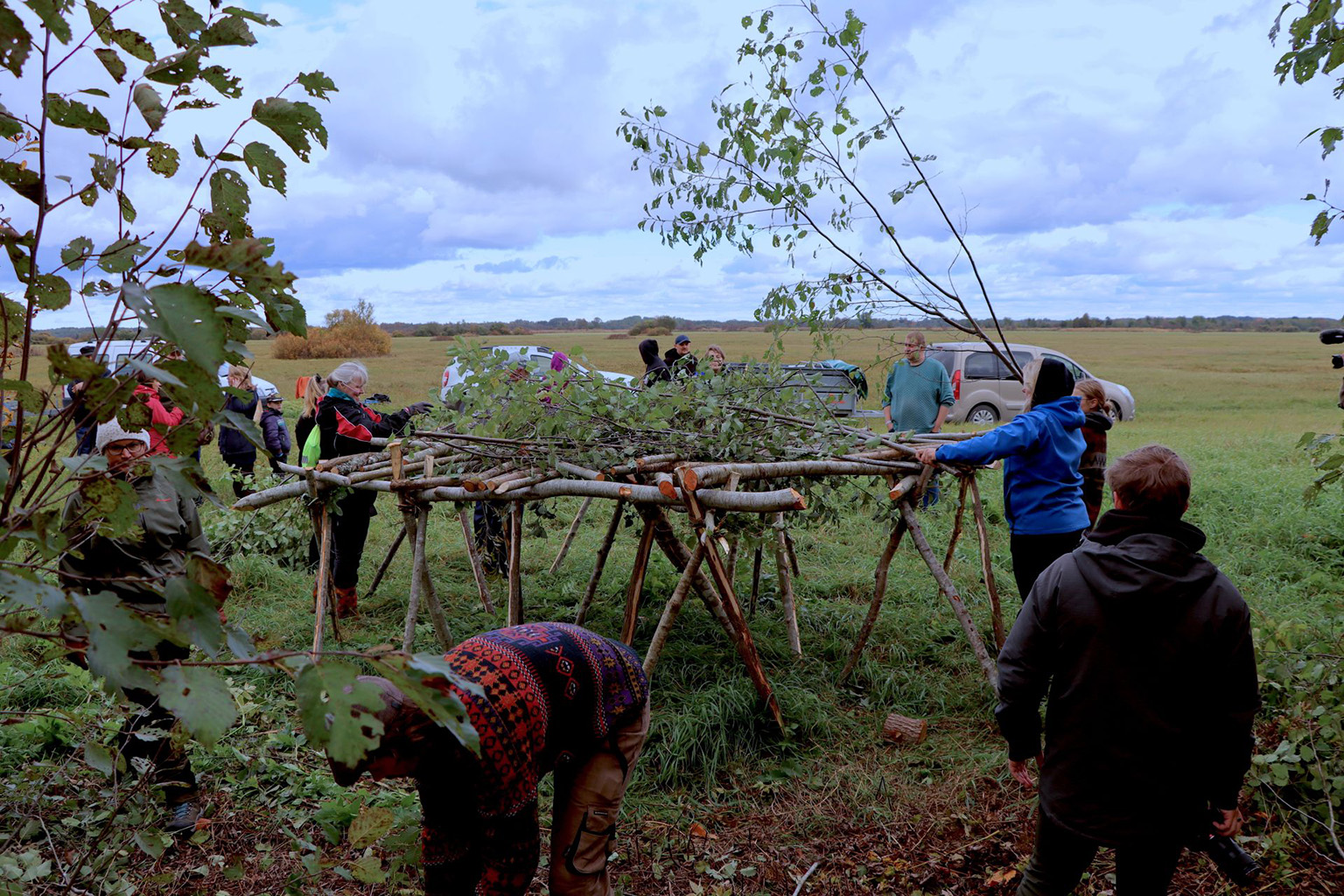
Estonia’s Matsalu region is characterised by the reedbeds along the Kasari River and Matsalu Bay, constituting an important stopover site for Arctic bird migration. The unique topography of the flooded meadows on the Kasari river plains has also led to a number of local artisanal innovations, including singlelog boats for river navigation along floodplains, and the building of haystack bases to protect them from seasonal flood waters. However, such traditional crafts have been under threat over the past century for various reasons: river dredging in the 1930s; the establishment of the nature reserve in the 1950s; the mechanisation of agriculture in the 1970s; and the abrupt change from a soviet economy to a capitalist one in the 1990s. Despite the activities of local craftivist enthusiasts in recent years, who seek to reconstruct and implement traditional knowledge in the area, much local expertise in knowing, managing, and navigating this unique environment has disappeared. This study seeks to understand how the need to preserve biodiversity, cultural traditions, and economic feasibility has been negotiated in these flooded meadows.
Keywords
flooded meadows, biodiversity, re-wilding, local artisanal practices, local knowledge
← Exit case study