Overview
The UK case studies focus on co-developing methods to surface intangible, affective responses to rewilding and restoration across three projects.
The Railway Land Wildlife Trust is a peri-urban nature reserve on the edge of Lewes, East Sussex. A chalk stream restoration project has recently transformed meadow pasture into a biodiverse wetland area. The Trust aspires to promote ecocentric cultures and human–nature resilience.
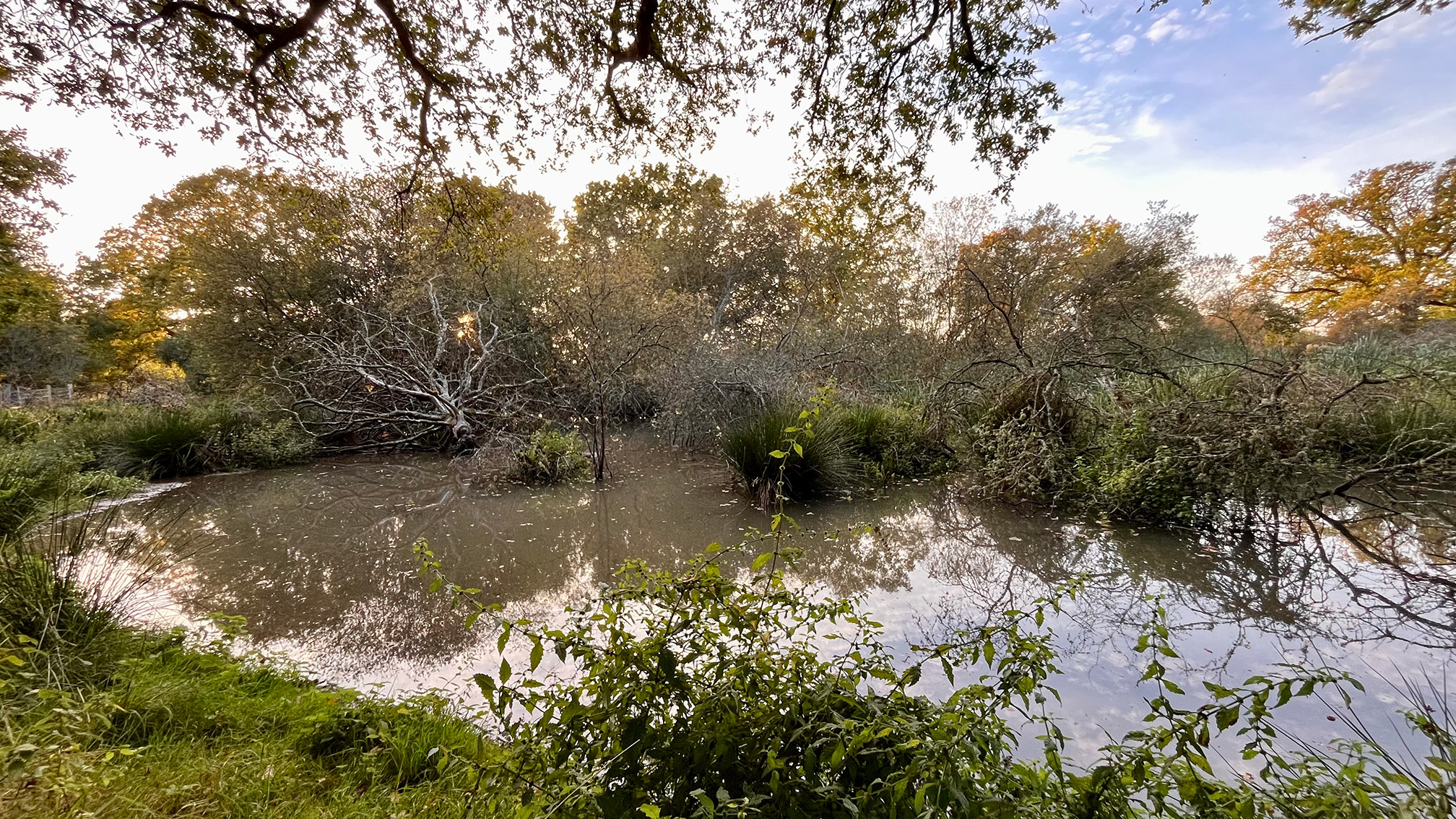
The Knepp Wilding Project was the first major lowland rewilding project in England, launched in 2001 as an experiment in hands-off naturalistic grazing. Recently reintroduced beavers have created a wetland habitat. Knepp is interested in how insights into the social valuing of these transformed habitats might inform future beaver licensing.
Local partners and communities
This work explores stakeholder experiences of a recently recreated wetland area. Through summer 2026, we will continue to iterate methods at the Knepp Wilding Project, focusing on how visitors and stakeholders perceive the profound ecosystem changes driven by a growing population of resident beavers. Scottish partners will be identified during this period.
Throughout the project, we will work closely with Rewilding Britain to explore whether and how these methods complement their evolving toolkit, supporting the UK-wide network of rewilding sites in understanding the intangible impacts of rewilded landscapes.
Context and impact
As one of the most nature-depleted countries in the world, the socio-cultural dynamics of rewilding and restoration in the UK differ from those shaping many EU projects. Understanding the intangible impacts of rewilding is therefore as important as monitoring ecological outcomes, yet this remains a key challenge for our partner organisation, Rewilding Britain, as few established methods currently exist.
We are working with rewilding and restoration sites to co-develop participatory mapping approaches that surface and articulate visceral and affective responses to rapid ecological change, including:
- The Railway Land Wildlife Trust, a 100-acre peri-urban nature reserve on the edge of Lewes, East Sussex. A chalk stream restoration project has recently transformed former meadow pasture into a biodiverse wetland area. The Trust aspires to foster ecocentric cultures that link human and ecological resilience.
- The Knepp Wilding Project, the first major lowland rewilding project in England, launched in 2001 as an experiment in hands-off naturalistic grazing across 3,500 acres. A pair of beavers reintroduced in 2022 has since reshaped the landscape, creating an extensive wetland. Knepp is interested in how insights into the social valuing of these transformed habitats might inform future beaver licensing.
- A Scottish site, to be identified in 2026.
Our aim is to map experiences of changing ecosystems by integrating walking-based methods with micro-phenomenological interviews. By adding sensory and visceral dimensions to deep mapping, we seek to better surface and articulate affective experiences, and to explore how these insights might contribute to decision-making in new and meaningful ways.
Keywords
intangible cultural heritage, sensory atmospheres, nature recovery, rewilding, Sussex, Ouse, Knepp, beavers, phenomenology
← Exit case study