
Overview
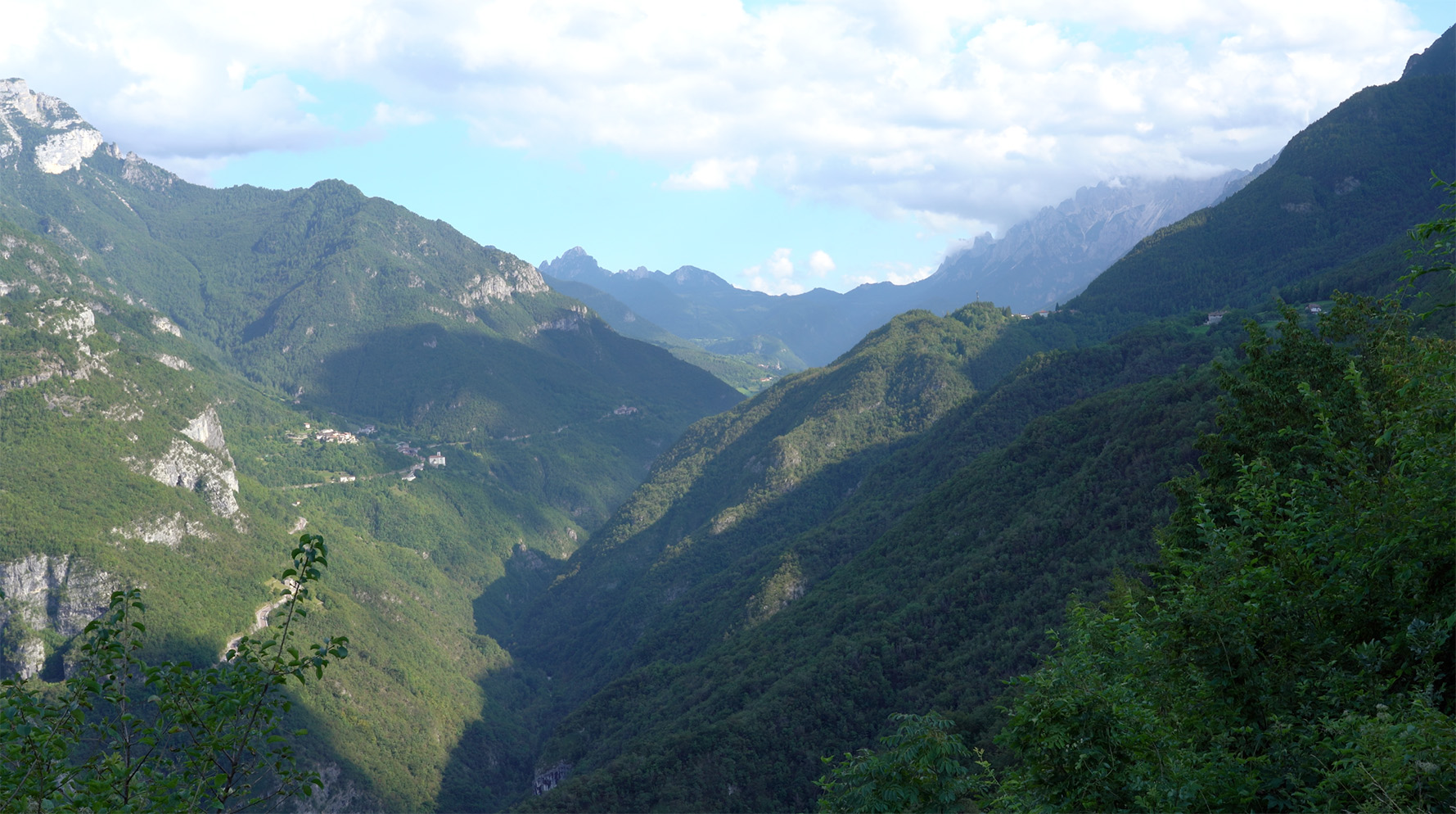
The case study centres on the Leno Valleys (Valli del Leno), encompassing the municipalities of Vallarsa, Terragnolo, and Trambileno in Italy’s Trentino Province. This project builds on my previous research in the area, and aims to explore how the abandonment of traditional agriculture over the past decades, the valleys' depopulation, and current rewilding have become contested sites of political confrontation, and why this is so.
Local partners and communities
The local partner is the Vallarsa Ethnographic Museum: a small institution holding an archive of historical documents that organises volunteer-run public events related to the valley’s past. I will collaborate with the Vallarsa Ethnographic Museum in both research (working with local collections and the various knowledge holders that gravitate to the museum) and dissemination (through events in the valleys, their history, and future).
Context and impact
The two valleys at the centre of this study span approximately 168 square kilometres and are inhabited by around 3,500 residents who primarily live in villages situated along the lower slopes, at elevations between 600-800 metres. Shaped by the Leno River, the valleys reflect centuries of agricultural development, characterised by terraced fields extending down to the river's edge, while larch and pine forests rise to higher pastures starting at around 1,000 metres.
Historically, the Leno Valleys were documented in records following their settlement during the 12th and 13th centuries by migrants predominantly from Bavaria and Tyrol. Their agricultural practices led to the establishment of monofamiliar settlements, which evolved into the current village structure. More recently, the area has undergone significant ecological and social changes following the First World War, a critical turning point. The war resulted in extensive damage to the soil and infrastructure, triggering a decline in the local population and a subsequent shift away from traditional agricultural practices.
Currently, the valleys have become a refuge for various nonhuman species, such as red deer, chamois, and wolves, which have thrived in the absence of intensive land use. These changes in land use patterns have prompted interest in reintroduction and conservation programmes, initiatives that have led to tensions at the local level. The project aims to analyse these tensions and their histories through both archival and ethnographic research.
Keywords
Abandonment, Rewilding, Rural Development, Alpine History, Depopulation
← Exit case study